 RJ Hamster
RJ Hamster
RJ Hamster
RJ Hamster
RJ Hamster
RJ Hamster
RJ Hamster

When I was 24 years old, I took out a $100,000 loan to get my master’s in finance. I thought I was buying the blueprint for how institutional investing really works.
Boy, was I wrong.
My formal education taught me how to speak Wall Street’s language so I could hold my own in a room full of analysts and bankers.
But what it didn’t teach me was how to make money in the real world.
A cash flow statement can tell you how a business works. A valuation model can help you compare one company against another.
But none of that tells you when Wall Street is missing the bigger picture, or when a stock is about to be valued much higher, or when a hated sector is about to come back to life.
And none of it tells you when the “smart” money is walking straight into a trap.
That kind of judgment only comes from experience.
I was lucky enough to learn from one of the best real-world investors I know: Teeka Tiwari.
Teeka taught me how to look beyond the obvious fundamentals. He taught me how to think beyond the textbooks when the bigger opportunity was hiding in plain sight.
Most of the investing knowledge that changed my life didn’t come from a classroom. It came from the newsletter business, where I’ve built a career over the last decade.
It came from studying real market cycles and real investor behavior… and having real money on the line. That’s the knowledge I used to go from six figures in debt when I graduated college to seven figures in the bank 5 years later.
Granted, you have to learn the rules before you can break them. But it pays off when the market proves you right.
The Smart Money Is Underwater
Just look at the so-called smart money.
For decades, investors have been told the same thing: Give your money to the big money managers. Trust the professionals. It’s the responsible thing to do.
After all, they have the teams of Ivy League analysts. They have the multimillion-dollar models. They have access to the private research you and I will never get.
If you’ve done that before, I don’t blame you. You did everything “by the book.”
But this year has exposed a hard truth that Teeka and I have believed for years… Even the smartest people in the room can get it wrong.
Take Pershing Square Holdings, a hedge fund run by billionaire investor Bill Ackman. It’s down 13% for the year.
We’re talking about one of the most famous investment firms in the world, not some tiny fund run by amateurs.
And it’s not the only example. Chris Hohn, who made a record $18.9 billion in profits last year, just watched his flagship TCI fund fall 9.4% in a single quarter.
Across Wall Street, big funds are struggling to keep up with a market that keeps punishing crowded trades. The average hedge fund is down 0.27% this year, after losing 3.6% last month alone.
Even industry giants like Citadel and Millennium spent much of April fighting just to get back to breakeven.
The Hidden Tax Most Investors Aren’t Seeing
The cost of this underperformance is vast. All of these firms charge you whether they make money or lose money. And even when they make you money, some of these funds can take as much as 50% of YOUR profits.
Think about that. They eat none of the loss, take as much as half of your gain, AND charge you 2-5% win, lose, or draw.
It’s an amazing racket.
What’s incredible about the time period we live in is we all have access to much more information than we’ve ever had before. And the so-called “retail” investor has been using that edge to light up the institutions.
In October 2022, JPMorgan’s CEO Jamie Dimon warned that we’d slip into a recession within six to nine months.
And yet, according to Business Insider, retail investors just kept buying stocks, spending a record $1.5 billion a day. By the end of 2023, they saw the S&P 500 return as much as 37%, while the average fund made only about 10%.
It was a similar story again during the tariff tantrum that started last year. While the big boys were running for the hills, and dumping over $40 billion in stocks… retail was buying, pouring $7.3 billion into the markets.
Retail investors who hung in there made as much as 48% buying the S&P 500 off its lows, while the broad hedge fund industry only made 12.5%.
Here we are again with the most recent oil crisis, and we can tell you we’ve been doing our part to help our “mom-and-pop” subscribers absolutely crush the “smart” money.
Last year, many of the big funds were paralyzed by ESG mandates. They were forced to sell perfectly good companies because of a narrative, pushed by the IEA and major banks like HSBC and Citigroup, that global oil demand would fall off a cliff after 2030.
We knew that decline story was wishful thinking. We looked at the facts and saw oil consumption had tripled since the 1960s, with no signs of slowing down thanks to demand for jet fuel, synthetic fibers, and heating.
We identified energy stocks priced so cheap, the “risk” was essentially boredom. Some were trading at discounts as big as 70% compared to tech.
While the “smart” money is now stuck in software indexes that have cratered 21% since January, our energy picks are up 53% on average over the same timeframe.
We didn’t take on huge risks to get those returns. We just ignored the crowd and waited for the price to catch up to the facts.
As outsiders, what’s our edge? You and I, we don’t report to shareholders, limited partners, or an investment committee. That means we can go against the herd. Take a position when fear is high and sentiment is low. Professionals can’t do that without risking their jobs.
That’s why we built our Asymmetric Edge research service. We’re not trying to copy the hedge funds or chase every AI darling that makes headlines on CNBC.
We also don’t ask our readers to pay Wall Street-level fees for Wall Street-level disappointment.
Instead, we focus on asymmetric opportunities. Situations where the upside is much bigger than the downside. Small, smart bets that can turn into much bigger wins.
This is the kind of investing Teeka has spent the last 20 years teaching since he walked away from Wall Street for good. And it’s the kind of thinking that changed my life.
Because real investing is about seeing when the market is focused on the wrong thing. It’s about spotting a trend before it becomes obvious. And it’s about having the courage to act when the crowd is still confused.
The Edge Wall Street Can’t Copy
That’s where regular investors can still have an edge.
A giant hedge fund cannot easily move into smaller opportunities without moving the market. It cannot move quickly without committees and red tape. And it cannot look strange for too long, because big investors expect clean quarterly reports.
We don’t have those problems. We can go where the big funds can’t. We can focus on the opportunities that are still too small, too early, or too misunderstood for the big institutions to care about.
That’s our advantage. And it’s working. While the top 10 hedge funds are down 0.27%, our Asymmetric Edge model portfolio is up 14%.
One subscriber wrote in this month after following our recommendation on Bloom Energy (BE), which sells around-the-clock power directly to data centers (comments edited lightly for clarity):
Purchased BE at $114.02 and now is up to $227. Been following Teeka for close to 5 years and my portfolio has certainly gotten much better from him. Thank you and your team, Teeka.
Another, Randy C., wrote:
I purchased Bloom Energy last December when it was recommended by Teeka along with the rest of the Asymmetric Edge portfolio. I sold half of it when recommended and made back more than the initial cost ($99) of the original subscription. Thank you again, Teeka!
Bloom already gave our subscribers the chance to book a 139% win for a “free ride,” and it’s still running. The remaining shares have now more than tripled since we added them in December.
I’m not saying every position will go up in a straight line, or be a winner like Bloom.
That’s not how real investing works. There will be pullbacks and volatility.
There will be times when the market makes you feel dumb before it proves you right.
But what our near 14.3% outperformance against the hedge funds shows is you don’t need to blindly follow the “smart” money to make smart decisions.
You don’t need to accept the idea that you’re stuck with whatever retirement plan Wall Street gives you.
I learned the textbook version of finance in school. I learned real-world investing from Teeka, from the newsletter business, and from putting real money behind real ideas.
And the biggest lesson I can share with you is this: You don’t get rich by blindly trusting the crowd. You get rich by learning how to think differently before the crowd is forced to catch up.
In a market where even the smart money is getting caught off guard, I believe regular investors need this kind of edge more than ever.
So if you’re tired of paying attention to Wall Street only to feel more confused…
And if you want a simpler way to find high-upside opportunities before they become obvious…
I encourage you to review our latest research inside The Asymmetric Edge.
We’ll show you what we’re buying, why we’re buying it, and why you should
consider sidestepping the madness in the most over-owned AI stocks.
Don’t Watch the Future Happen. Own It!
Houston Molnar
Update your email preferences or unsubscribe here
© 2026 Tiwari Research Group
1607 Ponce De Leon Ave
San Juan, Puerto Rico 00909, Puerto Rico
RJ Hamster

Wednesday, April 29

Complimentary Capital One All-Star Village Tickets are available starting Wednesday, April 29, 2026, at 10:00 a.m. EST until whenever the last ticket is redeemed. This ticket offer is open to Capital One credit and debit cardholders, including co-brand partner and Discover cards, which are open and active, and in good standing at the time of accessing tickets. Capital One private label retail credit cards are not eligible. You must use your eligible Capital One card to access tickets. Maximum of four (4) Capital One All-Star Village Tickets per transaction. Capital One All-Star Village Tickets are available on a first-come, first-served basis while supplies last. Use of any Major League Baseball game/event/exhibition ticket is subject to the standard terms, conditions, and health and safety policies applicable to the ticket; mlb.com/all-star/tickets/terms-and-conditions for details. Capital One All-Star Village Tickets may not be resold. Any individual reselling a Capital One All-Star Village Ticket by any method is subject to loss of the ticket privileges. Substitution and cash redemption not permitted.
© 2026 MLB Advanced Media, L.P. MLB trademarks and copyrights are used with permission of Major League Baseball. Visit MLB.com. Any other marks used herein are trademarks of their respective owners.
Please review our Privacy Policy.
You (pahovis@aol.com) received this message because you registered to receive commercial email messages from mlb.com.
Please add info@marketing.mlbemail.com to your address book to ensure our messages reach your inbox. If you no longer wish to receive commercial email messages from mlb.com, please unsubscribe or log in and manage your email subscriptions.
Postal Address: mlb.com, c/o MLB Advanced Media, L.P., 1271 Avenue of the Americas, New York, NY 10020.
RJ Hamster
Dear Reader,
A tiny $2 stock…
Quietly controls the largest gold deposit in the entire world…
Worth almost $1 TRILLION in total…
And I believe on July 1, they’re preparing to announce this historic discovery to the world.
Once that happens, the sky is the limit for early investors who get in now.
Click here to see everything you need to know.
Regards,
Jim Rickards
FEATURED ARTICLE

There are earnings days where you can almost feel the market getting bored.
This isn’t one of them.
Kinross Gold (KGC) releases Q1 2026 results after the close today, Wednesday, April 29, 2026. The call is tomorrow morning, Thursday, April 30 at 8:00 a.m. EDT.
Gold’s been strong long enough that we’re past the “cute macro narrative” stage. Now it’s the unsexy stage: does the cash actually land in the bank quarter after quarter?
That’s the tell. Everything else is commentary.
Before tonight’s numbers, Kinross already told you what kind of machine it can be in a supportive tape.
For full-year 2025, they reported:
The free cash flow number is the one that changes how you should think about KGC. A miner can “beat” EPS all day and still be a leaky bucket. Free cash flow is harder to fake, especially for more than a quarter.
Then there’s the capital return posture. Management guided to returning roughly 40% of free cash flow to shareholders in 2026 via dividends and buybacks. They also raised the quarterly dividend to $0.04 (a further 14%increase), which they described as a 33% total increase since Q3 2025. Sponsored
How to Legally Acquire Gold For Just $278 Per Ounce…
The “Warren Buffett of Canada” owns $50 million worth of this unique asset…
Click Here For All The Details
Here’s where I’m at: in this sector, saying “we’ll return capital” is table stakes. Saying how muchyou intend to return is better. Following through when the stock is already acting well? That’s the real separator.
Slight tangent, but it matters: miners get religion about buybacks right when cash is flooding in… and then they get timid the second the stock starts moving up. If you want to know whether management is serious, you watch the execution(dollars deployed, share count trend), not the press-release adjectives.
1) Did Q1 produce “real” cash?
Not just operating cash flow. Not just adjusted EBITDA. I want the full bridge in my head: operating cash flow → capex → free cash flow, and then where that cash went.
Because the market is in a mood where it’ll reward the boring thing: steady conversion. If KGC’s cash conversion stays tight in Q1, the stock can trade like a quality compounder for a while. If it gets messy, you’ll feel it immediately in the tone of the Q&A.
2) Is 2026 guidance steady… or is the language quietly changing?
In the FY2025 release, Kinross framed 2026 guidance around ~2.0 million attributable gold equivalent ounces (+/–5%). I’m less focused on tiny production variance and more focused on whether they start adding caveats.
The market forgives a quarter with weird weather, weird sequencing, a maintenance hiccup. What it doesn’t love is the first appearance of phrases like “reassessing,” “uncertain,” “challenging environment,” “higher-than-expected.”
3) Do they act like owners with the cash, or like deal junkies?
This is where I’m skeptical by default. The mining industry has a long history of turning strong gold tapes into bad acquisitions. It’s almost a tradition.
If the capital return framework stays front-and-center – great. If the script suddenly becomes “strategic opportunities” without strict return hurdles, I get cautious. Not because M&A is always wrong. Because “expensive M&A at the wrong time” is one of the easiest ways to destroy what should’ve been a great setup.
RBC upgraded Kinross to Outperform and raised its price target to $45, pointing to cash flow strength and leverage to a strong gold tape. That matters at the margin – it helps keep incremental institutional demand pointed in the right direction.
But price targets aren’t the thesis. The thesis is mechanical: if gold stays elevated, and if KGC keeps converting that tape into durable free cash flow, the stock doesn’t need a heroic narrative. It can just grind higher on math. Sponsored
Your Download Link Will Expire
If you still haven’t downloaded my free “Simple Options Trading For Beginners” guide…
…please take a few seconds and download it right now before your new temporary download link expires.
I eventually plan to charge money for this training, so do yourself a favor and download it now…
That way, no matter what it costs in the future, you’ll have a free copy on your computer.
Make sense?
FREE: Simple Options Trading For Beginners << Download Now
If I’m wrong on KGC from here, I don’t think it’ll be subtle. It’ll usually be one of these:
That’s why tonight’s print is useful. It’s a live test of whether the “cash machine” phase is still on… or whether it’s starting to wobble in the first quarter where everyone is watching.
I’ll be looking at the free cash flow bridge first, then listening for guidance tone. The rest is noise.
KGC is worth a closer look before the print clears.
Disclaimer: This article is for informational purposes only and does not constitute investment advice. Investing involves risk, including the potential loss of principal. Always do your own research before making investment decisions.
IMPORTANT NOTICE AND DISCLAIMER
Investing Media Solutions, LLC (“IMS”), the owner of this website (the “Website”), cannot guarantee the accuracy or completeness of the information contained in any article, email, newsletter, or other publication posted on or viewed in connection with this website (the “Publications”). The author or authors of those Publications are solely responsible for their contents. IMS has not done any research or due diligence into the markets, industries, or companies which may appear or be mentioned in the Publications. IMS will NOT be liable for any loss or damage caused by a reader’s reliance on information posted on the Website or contained in the Publications.
FOR EDUCATIONAL AND INFORMATIONAL PURPOSES ONLY; NOT INVESTMENT ADVICE.
This Website and the Publications are for educational and informational purposes only. This Website and the Publications do not purport to be a complete analysis of any company’s financial position. This Website, the Publications or any statements made in the Publications are not, and should not be construed to be, personalized investment advice directed to or appropriate for any particular individual. This Website or the statements made in the Publications should NOT be relied upon for purposes of transacting in any securities posted on the Website or mentioned in the Publications, nor should they be construed as a personalized recommendation to you to buy, sell, or hold any position in any security posted on this Website or mentioned in any Publications.
SUBSTANTIAL RISK IN INVESTMENT.
Any individual who chooses to invest in any securities including those mentioned in the Publications should do so with caution. Investing or transacting in securities involves substantial risk; you may lose some, all, or possibly more than your original investment. Readers bear responsibility for their own investment research and decisions and should review all investment decisions with a licensed or registered investment professional.
NOT AN INVESTMENT ADVISOR OR REGISTERED BROKER
Neither IMS nor any of its respective owners or employees are registered or licensed as a securities broker-dealer, broker, an investment advisor, or an investment advisor representative with the U.S. Securities and Exchange Commission (SEC), any state securities regulatory authority, or any self-regulatory organization.
To more fully understand our Website, please review our full disclaimer located at: https://thecheapinvestor.com/disclaimer/
At The Cheap Investor, it’s our mission to create and provide a community that helps you invest and understand stocks. When TheCheapInvestor was established, we wanted to make the community an inclusive place where investors can come to get ahead! Not just help them with daily stock picks. The Cheap Investor are provided to you for information only and should not be considered as a stock or investment advisor. The Cheap Investor may make available certain information related to trading strategies and stock prices for educational and information purposes only; any information made available should not be construed as an endorsement, recommendation, or sponsorship of any company or security. By visiting this site or using the training materials, you acknowledge and agree that any reliance upon the content or data available through The Cheap Investor is at your own sole risk. You are strongly advised to use your own judgment, research, and consult a professional advisor.
Over the years, and with thousands of followers that use our stock picks daily, we promise to always aim to get better at what we do every single day! In addition, our primary focus is on our communication with you. It’s really important to us that every time you come to us, you end up leaving with the help you came for to take your investment portfolio to new levels.
We particularly appreciate when our following provides feedback via testimonials, reviews, and comments left on our site or social media accounts. Because with that feedback, we can use it to make your next visit to our site even better than the last!
Since we put so much effort into the relationship with you, we hope that any investment in us is exactly the way you hoped it would be. Because by choosing to go with https://TheCheapInvestor.com/, it’s our promise that we provide a community you will come back to over and over again.
Now, as much as we care about making investors more successful, we also care about your privacy. TheCheapInvestor is owned and operated by TheCheapInvestor website.
We’re committed to the right to your privacy and strive to provide a safe and secure user experience. Our Privacy Policy explains how we collect, store and use personal information, provided by you on our website.
What Information Do We Collect?
When you visit our Web site you may provide us with two types of information: personal information you knowingly choose to disclose that is collected on an individual basis and Web site use information collected on an aggregate basis as you and others browse our Web site.
For example, you may need to provide the following information: • Name • Website URL information • Email address • Home and business phone number
In addition to providing the foregoing information, if you choose to correspond further with us through email, we may retain the content of your email messages together with your email address and our responses. We provide the same protections for these electronic communications that we employ in the maintenance of information received by mail and telephone. It also explains important information that ensures we won’t abuse the information that you provide to us in good faith. By accessing and using our website, you can trust that what you want to be kept private, will be kept private. If at any time, you would like to read our Privacy Policy and get a better understanding of your rights and liabilities under the law.
Feel free to visit our site, find the privacy policy in the footer and read it. If there is something you are concerned about or wish to get more clarity on, please let us know by contacting us at support@thecheapinvestor.com. The Privacy Policy also informs you of how to notify us to stop using your personal information. If you wish to view our official policies, please visit our website https://TheCheapInvestor.com/
At The Cheap Investor, we are strongly committed to protecting your privacy and providing a safe & high-quality online experience for all of our visitors. We understand that you care about how the information you provide to us is used and shared. We have developed a Privacy Policy to inform you of our policies regarding the collection, use, and disclosure of information we receive from users of our website. The Cheap Investor operates the Website.
Our Privacy Policy, along with our Term & Conditions, governs your use of this site. By using https://TheCheapInvestor/, or by accepting the Terms of Use (via opt-in, checkbox, pop-up, or clicking an email link confirming the same), you agree to be bound by our Terms & Conditions and our Privacy Policy. If you have provided personal, billing, or other voluntarily provided information, you may access, review, and make changes to it via instructions found on the Website or by emailing us at support@thecheapinvestor.com. To manage your receipt of marketing and non-transactional communications, you may unsubscribe by clicking the “unsubscribe” link located on the bottom of any marketing email. Emails related to the purchase or delivery of orders are provided automatically – Customers are not able to opt out of transactional emails. We will try to accommodate any requests related to the management of Personal Information in a timely manner. However, it is not always possible to completely remove or modify information in our databases (for example, if we have a legal obligation to keep it for certain timeframes, for example). If you have any questions, simply reply to this email or visit our website to view our official policies.
Update your email preferences or unsubscribe here
© 2026 The Cheap Investor
203 N La Salle Suite 2100
Chicago , Illinois 60601, United StatesPowered by beehiivTerms of Service
RJ Hamster

AN OXFORD CLUB PUBLICATION
Loyal reader since August 2025
SPONSORED
Congress to feature Trump on $100 Bill?
A shocking new plan was just introduced in Washington. The idea is to celebrate Trump’s new “golden age” by placing him on the $100 bill.
As you’ll see, it has little to do with the new Crypto Reserve…
Or Trump’s ambitious plan for Artificial Intelligence…
Former Presidential Advisor, Jim Rickards says, “Trump’s crowning achievement will be much, much bigger.”
In the months ahead, he predicts, the government will release a massive multi-trillion-dollar asset which it has held back for more than a century. And this will give ordinary investors a chance to strike it rich.
Click here to see the full details.
Rithm Capital (NYSE: RITM) is a mortgage REIT that sports a generous 10% yield. Will that dividend eventually turn into a sour note, or can it continue to make sweet, sweet music for investors?
Rithm Capital invests in a variety of loans, including residential mortgages, commercial loans, and consumer loans.
The measure of cash flow that we use for mortgage REITs and other lenders is net interest income. It’s safe to say Rithm’s net interest income has not been in rhythm. It’s been all over the place.
Net interest income plummeted to $115 million in 2024 from $255 million the year prior. It popped back to $212 million last year. This year, it is forecast to drop to $163 million, and it is projected to slip further in 2027 to $151 million.
SPONSORED
AI Company Signs MAJOR Apple Deal Until 2040!
It IPO’d in 2023. Now, it’s tech will be found in iPhones and iMacs until 2040. Will it be the next trillion-dollar company?
Safety Net has a big issue with falling cash flow. To feel secure about the dividend, we need to see cash flow be flat or rising. Each time it falls, Safety Net lowers the safety rating of the dividend. Declining cash flow is considered a cardinal sin.View larger image
As if that inconsistency isn’t bad enough, the company pays out multiple times its net interest income in dividends.
Last year, Rithm paid shareholders $643 million in dividends, or 304% of its net interest income.
This year, with net interest income expected to drop 23%, the payout ratio is projected to climb to 405%, or four times the amount of net interest income that Wall Street anticipates.
That is not sustainable.
Those figures paint a bleak picture… but sometimes companies with a strong dividend-paying track record deserve the benefit of the doubt.
Let’s see whether that’s the case for Rithm.Finish Reading Here
Odd Monthly Event Could More Than Triple Your Money
I Missed Gold In 1979. I’m Not Missing This.
Get Marc’s Top 5 Dividend Stocks (FREE PICKS)
From Fringe to Federal Approval: Three Unorthodox Stocks for MAHA’s Push Into Psychedelics
FacebookLinkedInEmail SharePush Alert
SPONSORED
Investing Wizard Who Turned
$37K Into $2.7M in Just 4 Years
Makes His Next Big Move
He started from nothing and became a multimillionaire…
He’s now one of the most sought-after trading experts…
Yet he operates 858 miles from Wall Street.
And now, he’s revealing his No. 1 favorite strategy that targets MASSIVE weekly profits with just one stock ticker.SEE THE PROOF HERE
You are receiving this email because you subscribed to Wealthy Retirement.
Wealthy Retirement is published by The Oxford Club.
Questions? Check out our FAQs. Trying to reach us? Contact us here.
Please do not reply to this email as it goes to an unmonitored inbox.
Privacy Policy | Whitelist Wealthy Retirement | Unsubscribe
© 2026 The Oxford Club, LLC All Rights Reserved
The Oxford Club | 105 West Monument Street | Baltimore, MD 21201
North America: 866.237.0436 | International: +1.443.353.4540
Oxfordclub.com
Nothing published by The Oxford Club should be considered personalized investment advice. Although our employees may answer your general customer service questions, they are not licensed under securities laws to address your particular investment situation. No communication by our employees to you should be deemed personalized investment advice. We allow the editors of our publications to recommend securities that they own themselves. However, our policy prohibits editors from exiting a personal trade while the recommendation to subscribers is open. In no circumstance may an editor sell a security before subscribers have a fair opportunity to exit. The length of time an editor must wait after subscribers have been advised to exit a play depends on the type of publication. All other employees and agents must wait 24 hours after publication before trading on a recommendation.
Any investments recommended by The Oxford Club should be made only after consulting with your investment advisor and only after reviewing the prospectus or financial statements of the company.
Protected by copyright laws of the United States and international treaties. The information found on this website may only be used pursuant to the membership or subscription agreement and any reproduction, copying or redistribution (electronic or otherwise, including on the world wide web), in whole or in part, is strictly prohibited without the express written permission of The Oxford Club, LLC, 105 West Monument Street, Baltimore, MD 21201.
REF: 000142349377
RJ Hamster

Issue #66, Volume #3Exactly How Buffett Was Wrong About OilBy Porter Stansberry • Wednesday 29, April 2026View in browser
Inside today’s Daily Journal…
The Dumbest Thing Warren Ever Did With Berkshire’s Money
Editor’s note: On May 16, 2025, Porter released The Better Than Berkshire Index, designed to show Complete Investor subscribers that they can outperform Warren Buffett’s Berkshire Hathaway. Starting with Monday’s Daily Journal and over the next two weeks, using the insights he has learned from Buffett himself over the decades, Porter will explain exactly what’s gone wrong with Berkshire and how investors can build a portfolio that can do better…
The Berkshire Hathaway annual shareholders meeting is this weekend.
And since no one at the meeting is going to ask any intelligent questions (everyone is there to slurp Warren Buffett in public), I thought I’d offer you more insight into what journalists and shareholders should be asking The Chairman.
On Monday, I shared some insights into how badly Berkshire’s core insurance business (GEICO) was performing compared to its peers (Progressive). But today (and tomorrow) I want to discuss a much bigger problem, a problem that could easily lead to total capital losses in excess of $100 billion – losses that, even for Berkshire, would threaten the financial stability of the entire enterprise.
The media never tells the truth about Buffett or the late Berkshire vice chair Charlie Munger. They are the only two people in finance who have a better reputation than squirrels. (Squirrels are just rats with good PR.) And here’s something every investor in Berkshire ought to know: Warren Buffett and Charlie Munger believed in Peak Oil.
In the early 2000s, the two main heads of Berkshire Hathaway believed that global crude oil production had peaked, or was about to peak, and that the long-run trajectory of oil prices was up and to the right indefinitely. They said so, on the record, in interviews and at shareholder meetings for at least a decade. Their largest oil-equity investment of the period – the $7 billion ConocoPhillips (COP) position acquired in 2008 – was made on this thesis, at the all-time-high oil price, and was disclosed by Buffett himself, the following February, as a major mistake.
Their Peak Oil conclusion was not a passing impression. It was their operating worldview, and it animated Berkshire Hathaway’s energy strategy from approximately 2000 through the middle of the following decade. In June 2008, with West Texas Intermediate crude trading near $140 per barrel, Buffett appeared on CNBC and was asked why oil prices were running so hot.
He answered:
We have been sticking straws in the ground now since Titusville in 1850 or something… We have found a lot of the oil that’s going to be found… And if we’re going to use 85 million barrels per day now… and the rest of the world is going to increase its demand… we’re going to have a tough time maintaining production that satisfies that demand at this price… Oil is finite… If you look at our production versus 30 years ago, it’s way down. Most fields are depleting at a pretty good rate… Who knows what the equilibrium price will be?
That is the Peak Oil thesis stated in plain English. The world has found most of the oil it is ever going to find. Demand is climbing. Supply will not keep pace. Prices have to go up. Or so the theory goes.
Buffett bought ConocoPhillips on this thesis in the summer and fall of 2008. The peak position, disclosed in the 2008 annual letter, was 84.9 million shares acquired at a cost of approximately $7.0 billion – an average cost basis of around $80 per share. By the close of 2008, COP traded near $52, and the position was carried at $4.4 billion. The paper loss at the snapshot was $2.6 billion. The eventual realized loss, after Berkshire began unwinding the position in early 2009 to harvest tax-loss offsets against capital gains elsewhere in the portfolio, totaled at least $1.5 billion of cash money, plus the opportunity cost of the rest of the position never reaching its cost basis.
Buffett explained it in his 2008 letter:
I told you in an earlier part of this report that last year I made a major mistake of commission (and maybe more; this one sticks out). Without urging from Charlie or anyone else, I bought a large amount of ConocoPhillips stock when oil and gas prices were near their peak. I in no way anticipated the dramatic fall in energy prices that occurred in the last half of the year. I still believe the odds are good that oil sells far higher in the future than the current $40–$50 price. But so far I have been dead wrong. Even if prices should rise, moreover, the terrible timing of my purchase has cost Berkshire several billion dollars.
Munger held the same views about Peak Oil and stated them even more bluntly.
At the 2009 Wesco Financial annual meeting – the small holding company that he ran inside the Berkshire family – he was asked about energy and the oil market and replied:
Whether the peak is five years from now or last year I don’t know, but we are somewhere near peak oil production. Oil, I think, will get more and more expensive.
A few years later, at a conference of the Committee of 100, the U.S.-China relations forum, Munger delivered the speech that became the definitive Peak Oil document of his career. The audio was transcribed by Shane Parrish at Farnam Street and published in July 2013.
The relevant passages from Munger’s remarks:
Oil and gas are absolutely certain to become incredibly short and very high priced. And of course the United States has a problem and China has a worse problem… Imported oil is not your enemy. It’s your friend. Every barrel that you use up that comes from somebody else is a barrel of your precious oil which you’re going to need to feed your people and maintain your civilization… Running out of hydrocarbons is like running out of civilization. All this trade, all these drugs, fertilizers, fungicides… they all come from hydrocarbons. And it is not at all clear that there is any substitute. When the hydrocarbons are gone, I don’t think the chemists will be able to simply mix up a vat and there will be more hydrocarbons.
By the time Munger gave that speech, American crude oil production had already begun the most dramatic expansion in 70 years.
The hydraulic-fracturing revolution in the Bakken, Eagle Ford, and Permian basins had been adding nearly 1 million barrels per day (b/d) of new supply every 12 months for several years running. The very phenomenon Munger said was certain not to occur – the appearance of substantial new hydrocarbon supply from a previously inaccessible source – was occurring – in real time, in his country, in volumes that were already visible in U.S. Energy Information Administration monthly statistics he or any analyst at Berkshire could have pulled in five minutes.
Munger didn’t care about these facts. His beliefs about Peak Oil were a crusade.
Four years after his Committee of 100 speech, at the February 2017 Daily Journal (DJC) annual meeting, after the Permian had already passed 5 million b/d, after the first U.S. liquefied natural gas (“LNG”) cargo had already left Sabine Pass, after the United States was about to become the largest crude-oil producer in the world for the first time since 1973, a shareholder asked him whether American natural-gas exploration and production was a good business.
He replied, on camera:
I have a different feeling about the energy business than practically anybody else in America. I wish we weren’t producing all this natural gas. I would be delighted to have the condensate that’s coming out of our shale deposits and natural gas just lie there untapped for decades in the future and pay extra a bunch of Arabs to use up their oil… I regard our oil and gas reserves just as chemical feedstocks, they’re essential in civilization – leave aside their energy content. I’d be delighted to use them up more slowly. By the way, I’m sure I’m right and the other 99% of the people are wrong.
“I’m sure I’m right and the other 99% of the people are wrong.” That is, in 15 words, what was about to be Berkshire shareholders’ largest loss in the company’s history.
In 2008, the year Buffett bought ConocoPhillips at the top, the United States produced an annual average of 5 million barrels of crude oil per day. That was the lowest annual production figure since 1946.
The production trend line in the U.S. had been negative, on a multi-decade smoothed basis, for 36 years. Every government and private analyst then forecasting U.S. production assumed continued decline. Buffett’s comment about “sticking straws in the ground now since Titusville” was, on the data set he was looking at, defensible.
In 2025, the United States produced an annual average of 13.60 million barrels of crude oil per day. That is a new all-time annual record, set 17 years after the trough, representing growth of 172% from the level Buffett observed when he bought shares of ConocoPhillips.
Including natural-gas liquids, the U.S. total-liquids figure for 2025 approaches 20 million b/d. The country that was “running out of oil” in 2008 is, in 2026, the largest hydrocarbon producer in human history.
The single largest contributor to that turnaround is the Permian Basin in West Texas and southeastern New Mexico, an oil province that had been considered mature and substantially depleted as recently as 2010. Permian crude production, which was roughly 0.8 million b/d in 2010, was 6.6 million b/d in 2025. The Permian Basin alone now accounts for 48% of all U.S. crude oil production, and it accounted for 80% of the entire U.S. production growth in 2025.
The technology that unlocked the Permian was not, despite the popular framing, a single innovation. It was a sustained 20-year compounding of three engineering disciplines.
The combination of the three reduced the marginal cost of producing a barrel from a Permian tight-oil well from roughly $90 in 2010 to $61 in 2025.
Munger’s position was particularly confusing to me. I couldn’t understand why he’d believe things that were patently false and that had been proven false for years.
Meanwhile, Berkshire Hathaway Energy is the only Berkshire subsidiary whose capital-allocation strategy was explicitly premised on the worldview that the United States was running out of cheap, accessible hydrocarbons. The investment only makes sense if the country must fund, at utility-rate-based expense, a multi-decade build-out of wind, solar, and high-voltage transmission infrastructure to replace cheap, abundant, hydrocarbon energy.
I am virtually certain that there’s not a single Berkshire Hathaway shareholder who realizes how much Berkshire has at risk in these investments… Buffett has never made money in energy. And its track record is about to become meaningfully and materially worse.
In tomorrow’s Journal, I will detail Berkshire Hathaway’s energy investments and explain the extent of the potential damage to Berkshire and its shareholders.
Tell me what you think of today’s Journal: porterstansberrydirect@gmail.com
Good investing,
Porter Stansberry
Stevenson, Maryland
Here’s why Porter and I flew 3,300 miles to investigate this financial story for you

Click here to hear Shannon’s message

1. Big tech earnings on deck. Alphabet (GOOG), Amazon (AMZN), Meta (META), and Microsoft (MSFT) all report earnings after today’s market close, followed by Apple (AAPL) tomorrow. Each company, along with others like Nvidia (NVDA) and Micron (MU), are part of the basket of artificial intelligence (“AI”) stocks that now represent 41% of the S&P 500 index. The market has rarely been this concentrated on a single investment theme – as shown in the chart above.
2. The $3.4 trillion time bomb in the Treasury market. Hedge fund repo borrowing (short-term borrowing of shares) has hit a record $3.4 trillion – tripling since 2019 and up 154% since 2022. Total hedge fund leverage now stands at over $7 trillion – the highest in history, now owning 8% of the entire $31 trillion U.S. Treasury market. Any spike in repo rates, jump in yields, or geopolitical shock could force a cascading unwind.
3. Oil approaches a post-war high as Trump digs in. Brent crude oil traded above $116 per barrel this morning – less than $4 below its March 9 peak of $120 – after the Wall Street Journal reported that President Trump has instructed aides to prepare for a prolonged blockade of Iranian ports. Trump himself posted at 4 am ET, telling Iran to “get smart soon,” above an image of himself holding a rifle in front of bombs exploding, captioned “NO MORE MR. NICE GUY!”
Complete Investor recommendationNvidia (NVDA) has reached a historic milestone – accounting for 4.96% of the MSCI All Country World Index, a weight that now officially eclipses the nation of Japan’s 4.94% share of the same index. Now, nearly five cents of every dollar entering global passive index funds is automatically allocated to Nvidia. Its valuation exceeds the annual GDP of several G7 nations. Shares are up 48% since we recommended them in June 2025.

Bill K. writes:
I saw this headline and didn’t consider what impact this would have on OPEC, but rather, immediately noted another major blow to the petrodollar and continued shift away from U.S. dominance.
BTW, currently reading2029: The End Of America. It’s all coming together with a variety of your Daily Journal material.
Thanks for all you do.
Wayne Y. writes:
I appreciate Marty Fridson’s clear and concise description of what is happening in the T-bill market. Would it be possible for him to do a follow-up article on how we as investors can prepare for this?
Ricky W. writes:
Enjoyed Marty’s article on the exposed U.S. Treasury funding. Seems as though there’s another verse or two to come?
Many thanks.
Daniel G. writes:
I very much enjoyed Shannon’s recent article on dual careers in marriage. And I really do agree with so much that she says based on my life experience. The one item I dispute though is her claim of cost savings because the couple does not require a second vehicle, because the spouse does not work outside the home. Who takes the kids to school, who takes them to extracurricular activities, who does the grocery shopping? At least in most parts of this country, I can’t imagine how the non-working spouse accomplishes what it takes to run an efficient household without a vehicle.
The second item is more subjective. We are about to celebrate our 50thanniversary. My wife is beautiful, strong, independent, smart, and accomplished. She has worked outside our home at times, she has stayed at home at times with our kids, and she stayed home for a time to care for her elderly parents. We have been truly blessed to allow her to do all this. However, I don’t know how other men think about this, but I have felt truly blessed because I know she does not need me. I have the freedom and joy to know we are about to celebrate our 50thbecause we love and want each other. Not that we need each other. Why is it that accomplished women with careers have a higher divorce rate? Because they can!
PriceYesterday’s ReturnYear-to-Date ReturnS&P 500 Index$7,138.80-0.49%4.7%Gold per ounce$4,596.75-1.89%5.4%Bitcoin$76,465.00-0.65%-11.9%Oil (West Texas Intermediate) per barrel$99.933.37%80.9%Berkshire Hathaway (BRK)$717,550.001.26%-4.9%Porter’s Permanent Portfolio–0.12%-0.9%The Better Than Berkshire Index–0.16%1.5%Total ReturnAnnual ReturnPorter & Co’s Top Ranked*32.0%14.2%YieldYesterday’s ChangeChange
Year-to-DateU.S Treasury 30 – Year Yield4.94%-1 bps9 bps
Prices as of 4:00 pm ET April 28, 2026
bps = basis points (or 0.01%)
*A Complete Investor risk rating of 1 is defined as a “low risk, high allocation” security, while positions rated closer to a 5 are higher risk. Porter & Co.’s top-ranked positions include those rated either 1 or 2 in Complete Investor.
PublicationTickerDescriptionTotal ReturnComplete InvestorBWXTBWX Technologies278%Tech FrontiersQUREuniQure237%Complete InvestorBTC/USDBitcoin183%Tech FrontiersSGMTSagimet Biosciences162%Tech FrontiersQUREuniQure131%Tech FrontiersROIVRoivant Sciences123%Tech FrontiersSGMTSagimet Biosciences110%Complete InvestorPMPhilip Morris108%Distressed InvestingHLFHerbalife102%Tech FrontiersTGTXTG Therapeutics101%
As of market close April 28, 2026
Please note: The investments in our “Porter & Co. Top Positions” should not be considered current recommendations. These positions are the best performers across our publications – and the securities listed may (or may not) be above the current buy-up-to price. To learn more, visit the current recommendations page of the relevant service, here. To gain access or to learn more about our current recommendations, call our Customer Care team at 888-610-8895 or internationally at +1 443-815-4447.
www.PorterandCompany.com | support@porterandcompanyresearch.com | 888-610-8895
You have received this e-mail as part of your subscription with Porter & Company, LLC. If you no longer want to receive e-mails, unsubscribe here.
Porter & Company, LLC welcomes comments or suggestions at support@porterandcompanyresearch.com. For questions about your account or to speak with customer service, call 888-610-8895 Monday-Friday, 9 a.m.-5 p.m. Eastern time.
Please note: The law prohibits us from giving personalized financial advice.
© 2026 Porter & Company, LLC,. All rights reserved. Any reproduction, copying, or redistribution, in whole or in part, is prohibited without written permission from Porter & Company, LLC.
Disclaimer: Nothing in this email should be considered personalized financial advice. Do not consider any communication between you and Porter & Company, and its employees or writers as financial advice. This work is based on SEC filings, current events, interviews, corporate press releases, and what we’ve learned as financial journalists. It may contain errors, and you shouldn’t make any investment decision based solely on what you read here. Insight is provided to help readers gain knowledge and experience. All investments carry risk. Readers should not trade if they cannot handle a loss and should not trade more than they can afford to lose. Consider consulting with a professional before making investment decisions. Please be aware that by accessing this publication, you acknowledge and agree that Porter & Co. and its editors and affiliates may, at any time, buy or sell securities discussed in this publication without prior notice. This may result in potential conflicts of interest, as Porter & Co., its editors, and affiliates may have a financial interest in the securities mentioned. The views expressed in this publication are subject to change without notice and reflect the personal opinions of the authors and speakers.
By submitting a response or feedback, you hereby grant Porter & Co. the right to use, reproduce, and publish your feedback in any and all marketing materials, including but not limited to online platforms, print advertisements, and promotional content. Your review may be edited for clarity and length, but the substance of your feedback will remain unchanged. Please note that your personal information will be kept confidential and will not be disclosed without your explicit consent. If you have any questions or concerns regarding this agreement, please contact us at support@porterandcompanyresearch.com or to speak with customer service, call 888-610-8895 Monday-Friday, 9 a.m.-5 p.m. Eastern time.
RJ Hamster


Wednesday, April 29
Welcome to The Pregame Lineup, a weekday newsletter that gets you up to speed on everything you need to know for today’s games, while catching you up on fun and interesting stories you might have missed. Today’s edition is brought to you by David Adler.
One of the most fun parts about the new ABS challenge system is how fans in the ballpark go crazy when their team gets a ball or strike call overturned their way.
And Reds fans might’ve just had the best reaction yet.
Why? Because a Cincinnati challenge won them all free pizza. Here’s how.
See, the Reds have this deal with local pizza chain LaRosa’s: If Cincinnati pitchers get 11 strikeouts in a home game, fans in attendance can use their ticket to redeem a free pizza within the next week. It’s called “Strikeouts for Slices.”
And yesterday, the strikeout that won Reds fans their slices came on an ABS challenge.
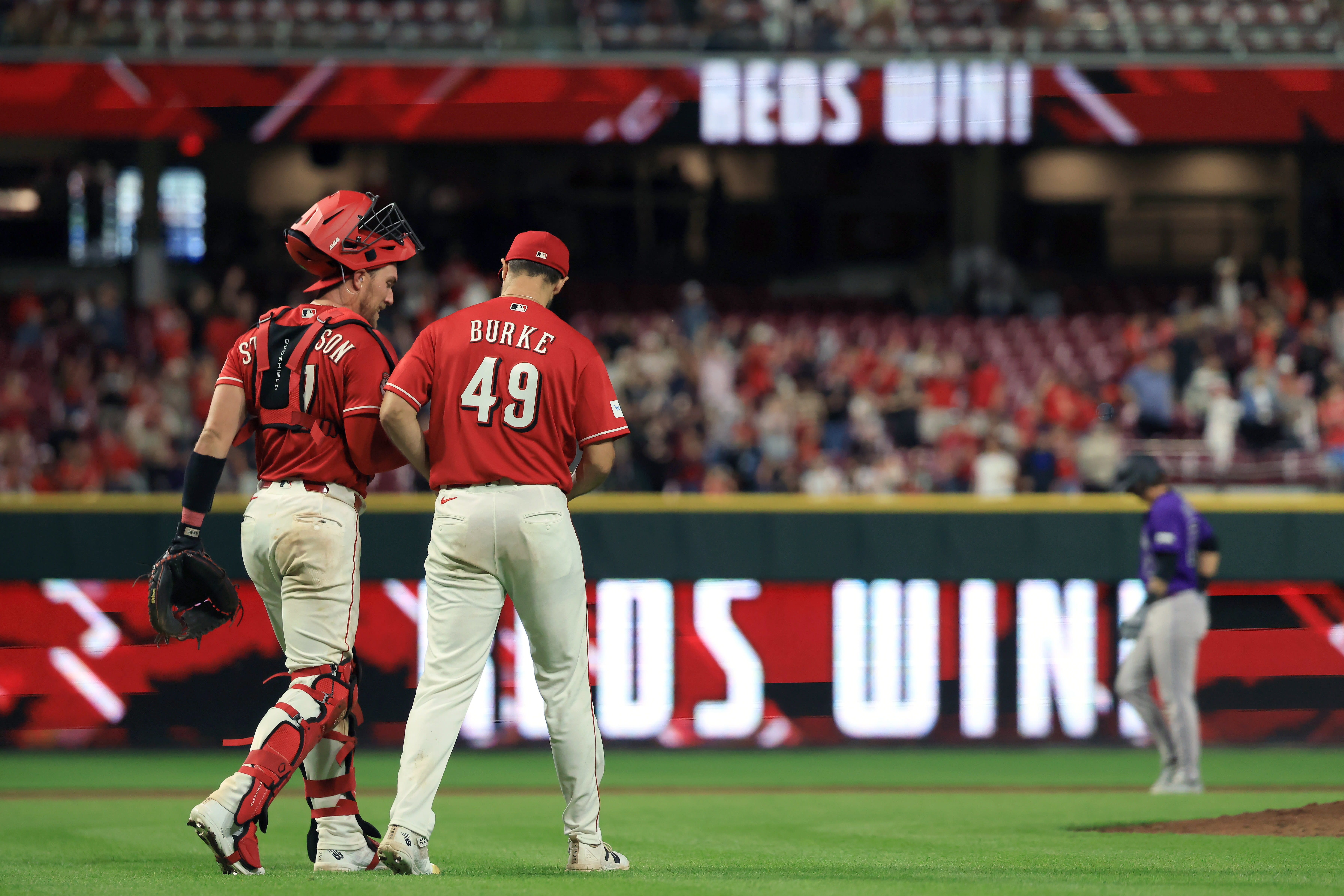
The Reds were sitting on 10 strikeouts entering the ninth inning of their 7-2 win over the Rockies at Great American Ball Park. Brock Burke was on the mound. Edouard Julien was at the plate.
And on a 1-2 count, Burke delivered a 98 mph fastball that was very close to the outside edge of the plate.
The pitch was called a ball. But Reds catcher Tyler Stephenson quickly challenged. Even in a five-run game, he was going to get that pizza for the Reds faithful.
The call was overturned (the pitch was in the zone by 1.1 inches), the Reds got their 11th strikeout, and the crowd went wild.
“I guess that was kind of like the perfect storm to get the pizza,” Stephenson said after the game.
Here are two games to watch tonight. For info on how to watch every game this season, go to MLB.com/Watch.
Giants at Phillies (6:10 p.m. ET, MLB Network/MLB.TV)
The Phillies got back to “better baseball” and won their first game under interim manager Don Mattingly. Now they have their ace going, Cristopher Sánchez, as they try to make it two in a row.
Tigers at Braves (7:15 p.m. ET, MLB.TV)
It’s baseball’s best team against baseball’s best pitcher. The Braves, who have the best record in the Majors at 21-9, are facing back-to-back AL Cy Young winner Tarik Skubal, who’s the favorite to win a third straight award in our first Cy Young poll of the season.

How much difference can a year make for a 119-loss team? A lot. Just ask the new-look Rockies.
The 2025 Rockies went 43-119, one of the worst records in modern baseball history. But the 2026 Rockies? They look a whole lot better.
An overhauled front office and coaching staff has helped the Rockies implement several simple fixes — particularly for their pitchers — that are already paying off.
Jared Greenspan has a thorough breakdown of how Colorado has modernized its pitching staff in just one offseason — but the gist is, Rockies pitchers have expanded their pitch arsenals, learning more effective pitch types and scrapping their bad habits from years past.
The Rockies’ new pitching philosophy is getting results. Their team ERA is way better. Last season it was an MLB-worst 5.99; this season it’s a much more respectable 4.19. Pitchers like breakout flamethrower Chase Dollander and the resurgent Antonio Senzatela are leading the way.
Heck, Baseball Reference’s Wins Above Replacement has the Rockies — yes, the Rockies — as the second-most valuable pitching staff in the Majors, tied with the Yankees and behind only the Reds. (WAR is adjusted for ballpark, so since the Rockies pitch a lot of games at the hitting cheat code that is Coors Field, they still rank highly, even though their overall runs allowed is middle of the pack).
Most importantly: The Rockies are winning more games. They’re 13-17, which is still under .500, but a .433 winning percentage is a lot different from their .265 winning percentage a season ago.
Colorado has already swept two teams: the Astros from April 6-8 and the Mets over the weekend. They swept exactly one team all of last season, the Marlins, back in June.
And think about this: This season, the Rockies got their 13th win in their 29th game, improving to 13-16 after sweeping the Mets. Last season, they got their 13th win in their 68th game. They were 13-55.
These aren’t the same old Rockies.
Here’s a rundown of the big things happening in baseball.
• Crochet to the IL
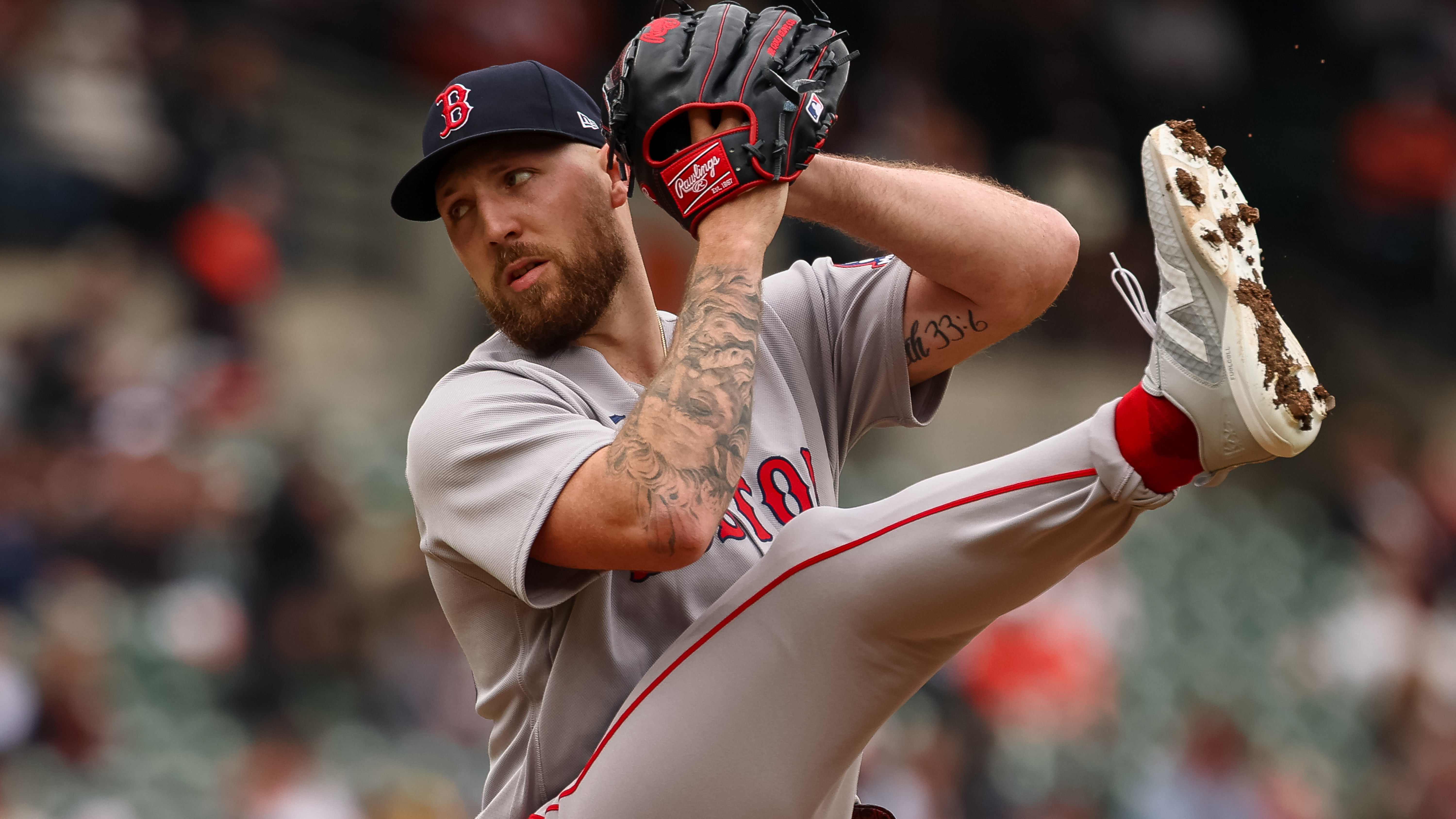
Red Sox ace Garrett Crochet was placed on the injured list today due to left shoulder inflammation. Crochet was off to an uncharacteristically slow start this season, with a 6.30 ERA through six starts after posting a 2.59 mark in his first season in Boston in 2025. Losing him is another tough blow to a Red Sox team that’s been struggling to start the year.
• Shohei the ERA leader
Your new MLB ERA leader is … (drumroll) … Shohei Ohtani. Ohtani’s 0.60 ERA is the lowest by a Dodger through five starts since Fernando Valenzuela’s 0.21 in 1985. Ohtani took over the top spot on the 2026 leaderboard from the Angels’ José Soriano yesterday — both of them pitched, but Ohtani allowed just one earned run in six innings compared to Soriano’s three in five innings, which raised his ERA to 0.84.
• Schlittler outduels deGrom (plus another Judge blast)
Yankees emerging star Cam Schlittler got the best of two-time Cy Young winner Jacob deGrom last night, throwing six shutout innings with eight strikeouts to beat the Rangers. (deGrom was also great, allowing one run in six innings with five K’s.) Schlittler has a 1.51 ERA this season.
He was the star even on a day when Aaron Judge homered for a third straight game and pulled even with Munetaka Murakami for the MLB lead with 12 home runs.
• The Soto and Bo show
Juan Soto and Bo Bichette gave Mets fans something to cheer about at Citi Field, as both stars crushed home runs to help the Mets get a much-needed win in yesterday’s series opener against the Nationals. Soto also had a fun moment later in the game when he enlisted some help during his at-bat … from the Nats’ catcher.
• Here comes Bobby
Bobby Witt Jr. led the Royals to a fourth straight win with a tiebreaking three-run homer in the 10th inning against the A’s. After a 27-game homerless drought to start the season, Witt has now hit home runs in back-to-back games.
• Blue Jays big guns returning
Trey Yesavage picked up right where he left off in his season debut yesterday, as the 2025 postseason sensation tossed 5 1/3 scoreless innings to beat the Red Sox. And the Blue Jays get another star back today: George Springer has been activated from the injured list.
• Rays dominating the AL
The Rays are on a six-game winning streakafter shutting out the Guardians yesterday, and they now have the second-best record in the American League at 18-11, behind only the division-rival Yankees. And they’ve absolutely dominated their own league. Since losing their first AL game to the Twins on April 3, the Rays have won 13 games in a row against AL teams, the longest streak since the Guardians’ AL-record 22 straight wins in 2017.

Today is the 40th anniversary of Roger Clemens’ historic 20-strikeout game for the Red Sox on April 29, 1986.
That day at a cold, damp Fenway Park, a 23-year-old Clemens became the first Major League pitcher to strike out 20 batters in a nine-inning game. It was one of the greatest pitching performances in MLB history and just the beginning for the eventual seven-time Cy Young winner.
A decade later, Clemens did it again. He was later joined by Kerry Wood, Randy Johnson and Max Scherzer. They’re the only pitchers to record 20 strikeouts in a nine-inning game — a 20-K game is one of baseball’s rarest feats.
On today’s anniversary, Ian Browne looks back on how Clemens’ first 20-strikeout game unfolded.

Now you can rep your favorite MLB team andone of the greatest baseball players of all time: Bugs Bunny.
New Era just dropped an incredible line of Looney Tunes baseball caps — where you can pick from a bunch of different combinations of MLB (and Minor League) teams and the iconic cartoon characters, from Bugs Bunny to Lola Bunny to Daffy Duck to the Tasmanian Devil.
Bugs Bunny, of course, famously starred on the diamond in the 1946 cartoon “Baseball Bugs,” when he played all nine positions — at the same time — to take down the Gas-House Gorillas.


© 2026 MLB Advanced Media, L.P. MLB trademarks and copyrights are used with permission of Major League Baseball. Visit MLB.com. Any other marks used herein are trademarks of their respective owners.
Please review our Privacy Policy.
You (pahovis@aol.com) received this message because you registered to receive commercial email messages from MLB.com.
Please add info@marketing.mlbemail.com to your address book to ensure our messages reach your inbox. If you no longer wish to receive commercial email messages from MLB.com, please unsubscribe or log in and manage your email subscriptions.
Postal Address: MLB.com, c/o MLB Advanced Media, L.P., 1271 Avenue of the Americas, New York, NY 10020.
RJ Hamster

THE SIGNAL BY TRADEALGO
They are called dark pools. Private exchanges where institutions trade massive blocks without moving the public market.
BlackRock is not buying 10 million shares of AAPL on the NYSE. They would move the price against themselves. Instead, they execute in dark pools. Invisible to retail traders until after the fact.
But here is what most people do not know: dark pool data is public. FINRA requires reporting within 10 seconds. The data exists. You just need to know where to find it and how to read it.
DARK POOL REALITY
40%
of U.S. equity volume
60+
active dark pools
10s
reporting delay
Source: FINRA ATS Transparency Data, SEC Market Structure Reports
WHAT WE LOOK FOR IN DARK POOL DATA
✓Volume Spikes
Unusual accumulation relative to 30-day average
✓Block Trades
Large single transactions (100K+ shares)
✓Directional Bias
Buy-side vs sell-side imbalance
✓Price Deviation
Trades executed above/below NBBO
REAL EXAMPLE: AMZN DARK POOL SPIKE
AMZNQUAD
$180 → $208.08
Mar 12 to Mar 26 (14 days)+15.60%
WHY THE AI FLAGGED IT
Dark pool volume hit $9.4B on March 12th. 2.3x the 30-day average. Block trades over $1M accounted for 68% of flow. Two weeks later, AMZN announced AWS expansion.
WHAT HAPPENS WHEN AI READS DARK POOLS FOR YOU Everest Growth
+71% Core Growth
+66% S&P 500
+17%
These portfolios use the same dark pool signals we just showed you. Our AI scans billions in institutional flow, finds the patterns, and acts on them automatically.
Past performance does not guarantee future results
LIVE WEBINAR
See How TradeAlgo’s AI Is Leading the Way
Sunday, May 4th · 7:00 PM ET
90 minutes · Replay included→ Reserve My Seat
Only 500 live spots
Join hundreds of members who have already registered
Dark pools are just one of the four data sources powering these results. Options flow. Congressional trades. Insider filings. All feeding into one AI system.
On May 4th, we are showing you exactly how it works. How AI scans billions of data points to find QUAD signals like AMZN before they move. And how these portfolios have been crushing the S&P 500 since January.
90 minutes. No fluff. Just the system and how to put it to work for you.
Spots are limited. Register now.
The Signal Team
TradeAlgo · New York★★★★★ 4.7/5 on Trustpilot
Past performance is not indicative of future results. Trading involves substantial risk. This is educational content, not investment advice.
TradeAlgo Inc. · 224 West 30th Street, New York, NY 10001
Unsubscribe | Manage Preferences
RJ Hamster


Follow @FlipboardSee More in The Daily EditionDownload App


Stay informed and inspired!
Download Flipboard to get the latest news and stories on the topics you care about.


Was this sent to you by a friend? For more like it, subscribe here.BLOG · CAREERS · ADVERTISEUpdate your email preferences or unsubscribe here.View our privacy policy here.©2026 Flipboard, Inc. Made with love at 555 Bryant St #352 Palo Alto, CA 94301
RJ Hamster
TODAY’S PATRIOT

James Stockdale (1923–2005) was a United States Navy vice admiral and aviator who became one of the most highly decorated officers in the history of the American military. A graduate of the U.S. Naval Academy and a scholar of Stoic philosophy, he was the commanding officer of Carrier Air Wing 16 when his A-4E Skyhawk was shot down over North Vietnam in 1965. Over the course of seven and a half years as a prisoner of war in the “Hanoi Hilton,” Stockdale served as the highest-ranking naval officer in captivity, organizing a sophisticated resistance system among his fellow prisoners. His extraordinary leadership and refusal to cooperate with his captors earned him the Medal of Honor and, later in life, a role as Ross Perot’s running mate in the 1992 presidential election.
A specific hallmark of Stockdale’s legacy is the “Stockdale Paradox,” a concept popularized by author Jim Collins that describes the mental discipline required to survive extreme adversity. The paradox consists of two seemingly contradictory mindsets: the absolute faith that you will prevail in the end, combined with the brutal honesty to confront the most painful facts of your current reality. Stockdale observed that the “optimists” in the prison camps—those who believed they would be home by Christmas or Easter—often died of a broken heart when those deadlines passed. By contrast, Stockdale used the teachings of the Stoic philosopher Epictetus to accept his grim circumstances while maintaining a long-term resolve, a psychological strategy that became a cornerstone for modern leadership and resilience training.